

iCell Water™
New Formulation!
Optimizing cell signaling through modulation of cell volume. Using neutral amino acid osmolytes and creatine to maximize cellular hydration. iCell™ has become a staple in preventing muscle loss in GLP-1 patients by decreasing protein degradation and maintaining beneficial hydration status.
Details
Supplement Facts
The iCell Water™ difference: Optimized cellular hydration.
Cellular Pathways
Creatine acts as an osmolyte by acting on the CT1 transporter which is a member of the (Na++Cl−)-dependent neurotransmitter transporter family.
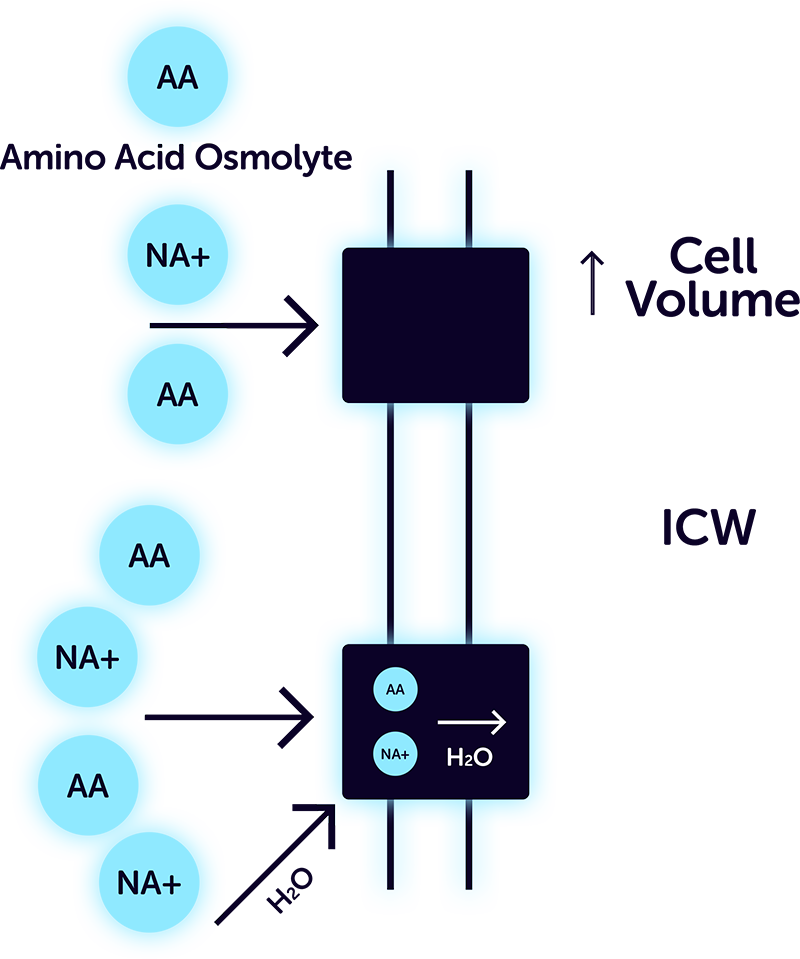
Glutamine leads to hepatocyte cell swelling due to cumulative, Na+-dependent, uptake into liver cells and activates RVD due to K+, Cl– and HCO3 – efflux.
Alanine leucine and Glycine lead to an increase in cell volume by osmotic pressure and moving through the NA+/K+/Cl anion channels.
Why this matters:
Muscle function is one of the greatest indicators of longevity and decreasing overall mortality risk.
Cellular hydration has many benefits when it comes to muscle function and other factors of cellular efficiency such as protein degradation, increased performance, and cardiovascular benefits.

Clinical Studies
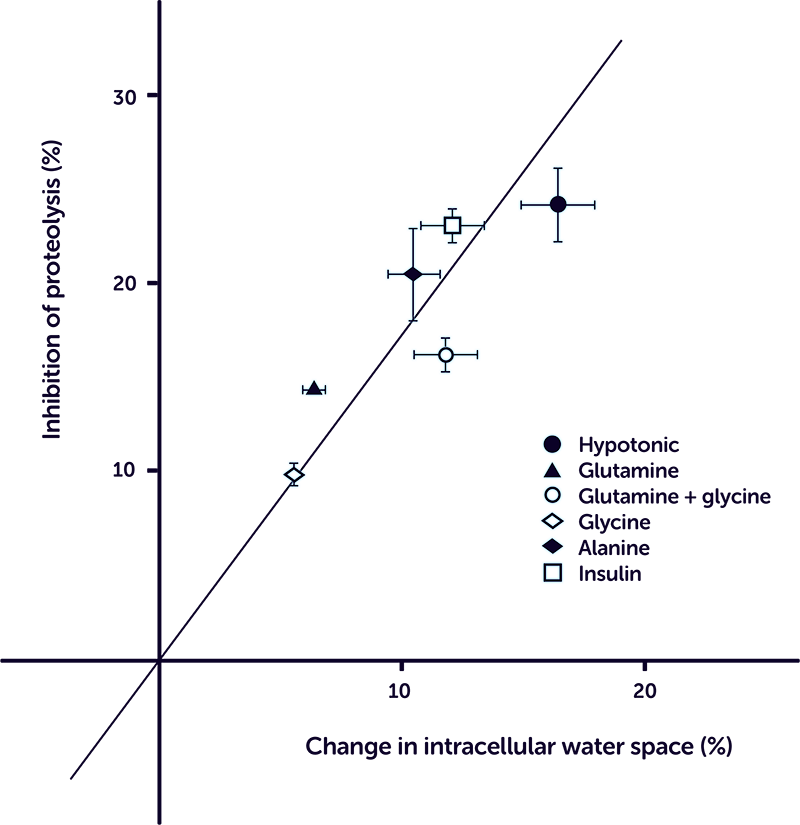
Change in intracellular water space
-
Higher intracellular water showed better functional performance independent of muscle mass.
-
Intracellular water was the main predictor of leg strength and jump performance in highly trained athletes.
-
Decrease in ICW during training was found to have reduced power and grip strength.
Synergy with GLP-1, Sermorelin:
GLP-1 indirectly causes muscle loss through reduced cellular hydration due to their ability to decrease thirst perception. This may cause a decrease in muscle cell volume due to a loss of intracellular water critical for maintaining muscle size and function. iCell is used in conjunction with GLP-1s to maintain the hydration status of the cell while improving exercise performance.
Sermorelin is anabolic to muscle and increases protein synthesis. iCell increases cell volume which also inhibits protein degradation and improves performance. Sermorelin and iCell both work synergistically to enhance recovery and increase exercise capacity.
References:
- Serra-Prat M, Lorenzo I, Palomera E, Ramírez S, Yébenes JC. Total Body Water and Intracellular Water Relationships with Muscle Strength, Frailty and Functional Performance in an Elderly Population. J Nutr Health Aging. 2019;23(1):96-101. doi: 10.1007/s12603-018-1129-y. PMID: 30569076.
- Jacques PF, Rogers G, Stookey JD, Perrier ET. Water Intake and Markers of Hydration Are Related to Cardiometabolic Risk Biomarkers in Community-Dwelling Older Adults: A Cross-Sectional Analysis. J Nutr. 2021 Oct 1;151(10):3205-3213. doi: 10.1093/jn/nxab233. PMID: 34383920; PMCID: PMC8485913.
- Silva AM, Matias CN, Santos DA, Rocha PM, Minderico CS, Sardinha LB. Increases in intracellular water explain strength and power improvements over a season. Int J Sports Med. 2014 Dec;35(13):1101-5. doi: 10.1055/s-0034-1371839. Epub 2014 Jul 10.
- Häussinger D, Roth E, Lang F, Gerok W. Cellular hydration state: an important determinant of protein catabolism in health and disease. Lancet. 1993 May 22;341(8856):1330-2. doi:10.1016/0140-6736(93)90828-5. PMID: 8098459.

1-MNA
1-MNA, a novel myokine, is a game-changer in cellular health by blocking the enzyme NNMT and optimizing NAD…

Tryptophan Re-Genesis
Tryptophan Re-Genesis™ is a comprehensive blend of L-tryptophan and key nutrient cofactors designed to support mood balance, immune…
Sytrinol® LNA
As an alternative to statins, Sytrinol®LNA leverages the synergy of leucine and nicotinic acid with polymethoxylated flavones and…